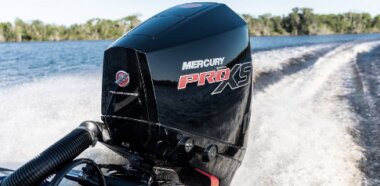
Yamaha 50HMHD Specifications
| Engine Model: Yamaha 50HMHD |
| Engine Type: 2-stroke inline 3-cylinder gasoline outboard engine |
| Total Displacement: 42.6 cu.in (698 cc) |
| Rated Engine Power: 50 Hp (36.8 kW) at 5000 rpm |
| Fuel System: Carburetor |
____________________________________________________________________________________
The Yamaha 50HMHD is a 50-horsepower,
three-cylinder, two-stroke outboard motor from Yamaha, representing a
powerful and reliable option in the mid-range outboard category. This
engine shares its 698 cc powerhead architecture with the 40VEO model but
is tuned to deliver increased output, making it an excellent choice for
boaters requiring more power for larger or heavier boats.
The 50HMHD is specifically configured as a manual start model with a
tiller handle, offering simplicity and direct control favored by many
anglers and operators of smaller craft. The engine features loop-charged
scavenging for efficient combustion, a reliable CDI ignition system, and
a 12-80 alternator output to keep the battery charged for accessories.
The Yamaha 50HMHD is equipped with a hydraulic tilt system for easy trim
adjustment and shallow water operation. Its robust construction and
proven two-stroke design provide dependable service for fishing,
recreational, and light commercial applications.
Engine type: 2-stroke, L (inline 3-cylinder).
Number of cylinders: 3.
Total displacement: 698 cc (42.6 cu in).
Bore and stroke: 67.0 x 66.0 mm (2.64 x 2.60 in).
Compression ratio: 6.0:1.
Maximum output: 36.8 kW (50 hp) at 5,000 rpm.
Full throttle operating range: 4,500-5,500 rpm.
Fuel system: 3 carburetors.
Intake system: Reed valve.
Scavenging system: Loop charge.
Ignition system: CDI (Capacitor Discharge Ignition).
Starting system: Manual.
Control system: Tiller handle.
Alternator output: 12V, 80W.
Enrichment system: Choke valve (manual).
Advance type: Electric automatic.
Spark plug: NGK B8HS-10 or NGK BR8HS-10.
Cooling system: Water, thermostatically controlled.
Exhaust system: Through propeller boss.
Lubrication system: Pre-mixed fuel and oil.
Recommended fuel: Regular unleaded gasoline, minimum 86 octane.
Recommended oil: 2-stroke outboard motor oil, NMMA-certified TC-W3.
Fuel-oil mixing ratio: 50:1.
Gear oil type: Hypoid gear oil SAE90.
Gear oil capacity: 0.43 L (0.45 US qt).
Gear ratio: 1.85 (24/13).
Gear shift positions: Forward - Neutral - Reverse.
Reduction gear type: Spiral bevel gear.
Clutch type: Dog clutch.
Propeller shaft type: Spline.
Propeller direction (rear view): Clockwise.
Trim/tilt system: Hydraulic tilt.
Trim angle range: -4 to 20 degrees.
Tilt-up angle: 69 degrees.
Steering angle: 40 + 40 degrees.
The Yamaha 50HMHD features a robust three-cylinder powerhead engineered
for durability and high power output. The cylinder block houses three
cylinders with a bore of 67.0 mm and stroke of 66.0 mm, producing a
total displacement of 698 cc. This displacement provides the foundation
for the engine's 50-horsepower output while maintaining the smooth
running characteristics inherent to three-cylinder designs.
The powerhead utilizes a loop-charge scavenging system, which creates a
swirling motion of the air-fuel mixture within the cylinders for more
complete combustion and efficient exhaust gas removal, contributing to
both power and fuel efficiency. The intake system employs reed valves
that act as one-way check valves to optimize air-fuel flow into the
crankcase and prevent backflow, enhancing low-end torque and throttle
response.
The crankshaft is precision-balanced to minimize vibration during
operation, improving operator comfort during extended use. The cylinder
head is designed with optimized combustion chamber shapes to promote
efficient burning of the air-fuel mixture. The compression ratio is
6.0:1, appropriate for the two-stroke design and allowing reliable
operation on regular-grade fuels.
The piston and ring assembly in the Yamaha 50HMHD is designed to
withstand the higher output levels of the 50-horsepower configuration.
While specific clearance values for this model would be detailed in the
official Yamaha service manual, the three-cylinder design requires
precise matching of pistons to cylinders to maintain proper compression
and oil control. The pistons are manufactured from high-strength
aluminum alloy and feature a carefully engineered skirt profile to
reduce friction while maintaining stability within the bore.
The piston rings provide effective sealing of the combustion chamber
while controlling lubrication. During any rebuild or top-end service,
verification of ring end gaps and side clearances according to factory
specifications is essential for ensuring proper engine performance and
longevity. The connecting rods are designed to handle the increased
loads associated with the 50-horsepower output level.
The Yamaha 50HMHD employs a sophisticated fuel system utilizing three
separate carburetors, one for each cylinder, ensuring precise fuel
delivery and balanced performance across the engine's operating range.
This multi-carburetor setup is essential for achieving the 50-horsepower
output while maintaining smooth operation and responsive acceleration.
The fuel system draws gasoline from an external 24-liter fuel tank,
which is included with the engine. Starting enrichment is provided by a
manual choke valve system, which allows the operator to enrich the fuel
mixture for reliable cold starts. The choke should be used according to
the starting instructions in the owner's manual, particularly in cooler
weather conditions.
The fuel system includes a replaceable fuel filter that requires
periodic inspection for water or contamination. Regular inspection of
all fuel lines for leaks, cracks, or deterioration is essential for safe
operation. The use of clean, fresh regular unleaded gasoline with a
minimum octane rating of 86 is required for proper engine performance
and longevity.
The Yamaha 50HMHD utilizes a pre-mix lubrication system, requiring the
operator to mix two-stroke oil directly with the gasoline in the fuel
tank. This design simplifies the engine by eliminating an oil injection
pump and associated components, enhancing reliability and reducing
maintenance requirements.
The recommended oil is NMMA-certified TC-W3 two-stroke outboard motor
oil, with Yamalube being the preferred choice for optimal performance
and engine protection. The required fuel-oil mixing ratio is 50:1,
meaning 50 parts gasoline to 1 part oil by volume.
Proper mixing is critical for engine longevity; oil must be thoroughly
mixed with fuel, preferably in a separate mixing container before
filling the fuel tank, to prevent engine damage from insufficient
lubrication. Inadequate mixing or use of incorrect oil can lead to rapid
engine wear, seizure, or catastrophic failure. The pre-mix system
requires operator attention to ensure proper oil ratios are maintained
with every refueling.
The cooling system is a raw-water, thermostatically controlled design
that draws water from the surrounding environment to regulate engine
temperature. A water pump, driven by the driveshaft, pulls water through
an inlet in the lower unit and circulates it through water jackets
surrounding the cylinders and cylinder head. The thermostat regulates
coolant flow, allowing the engine to reach optimal operating temperature
quickly and maintaining consistent temperatures during operation.
The water pump is a critical maintenance item and should be inspected
and the impeller replaced at recommended intervals to ensure proper
cooling system function. The system includes a cooling water pilot
tell-tale that provides a visual indication of water pump operation and
circulation.
An important maintenance practice is flushing the cooling system with
fresh water after operation in salt, brackish, or polluted water to
prevent deposit buildup and corrosion. The engine incorporates an
overheat warning system that alerts the operator if cooling water flow
is insufficient or if the engine exceeds safe operating temperatures.
| Mid Section and Lower Unit |
The mid section connects the powerhead to the lower unit and houses the
exhaust tube and driveshaft. The lower unit contains the reduction
gearing and propulsion components engineered for efficiency and
durability in the 50-horsepower application. The gear ratio is 1.85:1
(24/13), providing an optimal balance of acceleration and top-end
performance for a variety of boat types.
The reduction gears are of the spiral bevel type, selected for their
strength, smooth operation, and ability to handle the torque produced by
the engine. The clutch mechanism is a dog clutch design that provides
positive engagement for shifting between forward, neutral, and reverse
gears. The propeller shaft utilizes a spline drive system for secure
propeller attachment and efficient power transfer.
The gear housing is filled with hypoid gear oil meeting SAE90
specifications, with a total capacity of 0.43 L (0.45 US qt). Regular
inspection and periodic changing of the gear oil is essential to detect
water ingress or metal particles that may indicate internal wear. The
lower unit incorporates sacrificial anodes to protect against galvanic
corrosion in saltwater environments.
The Yamaha 50HMHD is equipped with a hydraulic tilt system that allows
the operator to adjust the engine angle for optimal performance and
shallow water operation. This system provides a trim angle range of -4
to 20 degrees, allowing fine-tuning of boat attitude for various loading
conditions and water surfaces.
Negative trim angles allow the engine to be trimmed in toward the
transom for improved planing and bow-down attitude, while positive trim
angles provide bow-up attitude for increased top speed and efficiency on
calm water. The maximum tilt-up angle is 69 degrees, enabling shallow
water operation and facilitating beaching, launching, or trailering.
The hydraulic tilt system provides smooth, controlled movement and holds
the selected position reliably during operation. The tiller handle
incorporates controls for trim adjustment, allowing the operator to make
changes while underway. The steering system provides 40 degrees of
rotation in both directions, offering excellent maneuverability at low
speeds and during docking.
Proper propeller selection is essential for maximizing the performance
and efficiency of the Yamaha 50HMHD. The engine is designed to operate
within its full throttle RPM range of 4,500 to 5,500, and the propeller
pitch must be selected so that, with a normal boat load, the engine
reaches the upper portion of this range at wide-open throttle. Yamaha
offers a comprehensive range of three-blade aluminum propellers in
various diameters and pitches to accommodate different boat types and
applications.
Available propeller options include 3 x 10 x 15, 3 x 10⁻¹/4 x 14, 3 x
10-3/4 x 16, 3 x 10⁻³/4 x 17, 3 x 10⁻³/8 x 13, 3 x 10⁻⁵/8 x 12, 3 x
11-1/8 x 13, 3 x 11-1/4 x 14, 3 x 11-3/8 x 12, 3 x 11-5/8 x 11, 3 x
11-3/4 x 10, 3 x 12-1/4 x 9, 3 x 12 x 11, and 3 x 12 x 12.
Lower pitch propellers provide quicker acceleration and better
load-carrying capability, making them suitable for heavier boats,
watersports applications, or operations requiring frequent planing.
Higher pitch propellers deliver increased top speed for lighter, faster
craft. The propeller nut must be tightened to the specified torque to
secure the propeller properly and prevent damage to the thrust washer or
propeller hub.
Overall length: 1,281 mm (50.4 in)
Overall width: 360 mm (14.2 in)
Overall height (long shaft): 1,350 mm (53.1 in)
Transom height (long shaft): 508 mm (20.0 in)
Weight (long shaft): 84 kg (185 lb)
After first 10 hours or 1 month: Check and adjust carburetor
synchronization and ignition timing. Retighten all cylinder head bolts,
crankcase bolts, and engine mounting bolts. Change gear oil.
Every 50 hours or 3 months: Inspect and clean spark plugs, adjusting gap
if necessary. Check and clean fuel filter. Inspect fuel lines and primer
bulb for cracks or damage. Check gear oil for water contamination and
change if necessary. Lubricate all control linkages and moving parts on
tiller handle.
Every 100 hours or 6 months: Clean and adjust spark plugs or replace if
worn. Clean cooling water passages and inspect thermostat operation.
Check condition of sacrificial anodes on engine and lower unit. Check
and adjust carburetor settings and idle speed.
Every 200 hours or 1 year: Replace spark plugs with specified NGK
B8HS-10 or BR8HS-10. Replace water pump impeller. Inspect and clean
entire fuel system, including carburetors. Check and adjust reed valve
condition. Replace fuel lines if hardened or cracked. Perform thorough
check of all electrical connections and controls. Change gear oil
regardless of condition.
Cylinder head bolt (1st step): 15 Nm (11 lb-ft)
Cylinder head bolt (2nd step): 28 Nm (20 lb-ft)
Engine unit bolt: 21 Nm (15 lb-ft)
Flywheel nut: 110 Nm (80 lb-ft)
Reed valve bolt: 1 Nm (0.7 lb-ft)
Spark plug: 25 Nm (18 lb-ft)
Propeller nut: 30 Nm (22 lb-ft)
Lower unit bolt: 40 Nm (29 lb-ft)
Propeller shaft housing bolt: 16 Nm (11 lb-ft)
Tiller handle mounting nut: 38 Nm (27 lb-ft)
Steering friction mounting nut: 20 Nm (14 lb-ft)
Tiller handle pivot bolt: 38 Nm (27 lb-ft)
Muffler bolt: 21 Nm (15 lb-ft)
Exhaust manifold bolt: 21 Nm (15 lb-ft)
Exhaust guide bolt: 21 Nm (15 lb-ft)
The Yamaha 50HMHD is a versatile outboard engine suitable for a wide
range of boats requiring 50-horsepower propulsion. The tiller handle
configuration makes it particularly popular among anglers who prefer
direct engine control and simplified rigging on fishing boats, including
aluminum tiller-steered craft, jon boats, and semi-V hulls designed for
inland and coastal fishing.
The engine's 50-horsepower output provides excellent performance on
small to medium aluminum and fiberglass skiffs, offering the power
needed for quick planing and efficient cruising. Inflatable boats and
rigid-hull inflatables benefit from the engine's favorable
power-to-weight ratio, making it suitable for tender and rescue craft
applications.
Commercial users in aquaculture, patrol, and light utility applications
appreciate the engine's durability and the simplicity of the manual
start, pre-mix design. The hydraulic tilt system enhances versatility by
allowing operation in shallow water areas. The engine includes safety
features such as a stop switch with lanyard and overheat alarm system to
protect the powerhead under demanding conditions.
____________________________________________________________________________________
| Outboard Engines Technical Specifications |
| Small Engines Technical Specifications |
| Car Engines Technical Specifications |
| Industrial Engines Technical Specifications |