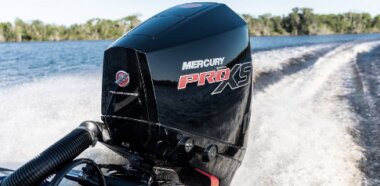
| Home / Outboard Engines / Evinrude Engines / Evinrude 88 SPL |
Evinrude 88 SPL Specifications
| Engine Model: Evinrude 88 SPL |
| Engine Type: 2-stroke 4-cylinder gasoline outboard engine |
| Total Displacement: 99.6 cu.in (1.6 L) |
| Rated Engine Power: 88 Hp (65 kW) at 5500 rpm |
| Fuel System: Side-draft carburetors |
____________________________________________________________________________________
| General Technical Data |
The Evinrude 88 SPL is a V4, two-stroke
outboard engine known for its robust simplicity and reliable torque.
Produced primarily throughout the 1980s and 1990s, the "SPL" designation
signified a Special model, often characterized as a "no-frills"
workhorse stripped of some amenities found on its higher-Hp counterparts
like the 90 or 115 hp models. This design philosophy resulted in an
engine that is highly regarded by boaters for its ease of maintenance
and dependable performance, making it a popular choice for a wide range
of small to mid-sized boats.
The 88 SPL features a 90-degree, loop-charged V4 architecture.
Loop-charging is a highly efficient method of scavenging used exhaust
gases and drawing in a fresh fuel-air mixture through precisely
positioned ports in the cylinder walls, rather than using deflector
pistons. This design contributes to the engine's strong power output and
torque curve. The engine is a crossflow design, distinguishing it from
later 60-degree models. Its two-stroke cycle means it produces power
with every revolution of the crankshaft, resulting in the instant
throttle response and vigorous acceleration that two-stroke outboards
are celebrated for.
While a 90-degree V4, the 88 SPL was manufactured in several iterations
with key differences. Early versions, such as those from the late 1980s,
were often marketed as base models. These early engines sometimes came
without power trim and tilt as standard equipment, relying instead on
manual lifting or aftermarket additions. They were also designed to run
on pre-mixed fuel, requiring the operator to mix two-stroke oil with the
gasoline in the tank.
The electrical system on these early models featured an unregulated
charging output and employed carburetors with fixed orifices, meaning
they lacked adjustable air-fuel mixture screws. Later models, like the
1996 version, incorporated more advanced features, most notably the VRO
(Variable Rate Oiling) system.
This system automatically mixed oil from a separate onboard tank with
the fuel, varying the ratio based on engine speed to reduce smoke and
oil consumption at idle while ensuring adequate lubrication at high rpm.
The VRO system operates at a ratio as lean as 100:1 at idle and
progresses to 50:1 at wide-open throttle. Many of these later engines
also came factory-equipped with a power trim and tilt system.
The Evinrude 88 SPL is defined by a set of core specifications that
dictate its performance and applications. The engine delivers 88 Hp at
the propeller, a rating derived from its naturally aspirated, carbureted
induction system. The displacement is a constant across most model
years, measuring 99.6 cubic inches. This displacement, combined with the
V4 configuration, provides the engine with substantial low-end torque,
making it an excellent propulsion unit for boats that require strong
planing power, such as smaller center consoles, bass boats, and
dual-console family runabouts.
The bore and stroke of the engine measure 3.601 inches and 2.588 inches
respectively. These dimensions contribute to the engine's oversquare
design (bore larger than stroke), which is conducive to achieving higher
rpm and reducing piston speed for enhanced durability. The fuel
induction is handled by four individual, one-barrel carburetors, one
feeding each cylinder. This setup ensures a precise fuel delivery to
each combustion chamber, optimizing power and throttle response across
the operating range.
Ignition timing is a critical specification for engine performance. The
88 SPL is designed to operate with an initial high-speed ignition timing
of 28 deg before top dead center. Proper setting of this timing is
essential for achieving full rated power and efficient fuel combustion.
The engine's recommended full-throttle operating range is between 5000
and 5500 rpm. Achieving the correct WOT rpm within this band is a
primary goal when selecting a propeller, as it ensures the engine is
operating within its most efficient and durable power curve. Data from
real-world applications show that with the correct propeller setup, the
engine can achieve its peak rpm, delivering speeds approaching 40 miles
per hour on appropriate hulls.
| Powerhead |
The cylinder block is a rugged, corrosion-resistant casting that houses
the four cylinders in a 90-degree V configuration. This V-angle allows
for a compact and rigid powerhead design.
The cylinder heads are individual components that bolt onto the block,
sealing the combustion chambers at the top of each cylinder. Removing
the cylinder heads provides access to the pistons and cylinder walls for
inspection, decarbonization, or service.
A crucial internal component within the water jacket of the cylinder block is the use of rubber "deflectors" or "diverters". These are long pieces of rubber tubing positioned parallel to the cylinders. Their function is to direct the flow of cooling water to the hottest areas of the cylinder walls, ensuring even cooling and preventing the formation of hot spots that could lead to engine damage.
Over time, these deflectors can deteriorate or become dislodged, necessitating their replacement during major engine overhauls or when addressing persistent overheating issues isolated to one bank of cylinders.
| Fuel System |
The fuel system on the Evinrude 88 SPL is a blend of mechanical and
electro-mechanical components. At its heart are the four side-draft
carburetors. On later models, these carburetors were equipped with
plastic float bowls, which can warp over extended periods, potentially
causing fuel leaks or air infiltration; metal bowls are available as a
replacement upgrade. The system includes a conventional fuel pump,
typically diaphragm-operated by crankcase pressure pulses, to draw fuel
from the boat's tank and deliver it to the carburetors.
On models equipped with VRO, the fuel system is integrated with the oil
injection. The VRO pump is a more complex unit that uses engine vacuum
and pressure pulses to pump both fuel and oil. It draws fuel from the
main boat tank and oil from a dedicated reservoir on the engine. Inside
the pump, the two fluids are metered and mixed before being sent to the
carburetors.
The "Variable Rate" aspect means the oil-to-fuel ratio changes with engine demand, providing a richer oil mix at high rpm for added protection and a leaner mix at idle to reduce smoke and fouling. For pre-VRO models or those where the VRO system has been disabled, the engine runs on a pre-mixed fuel ratio of 50:1, using quality TCW-3 two-stroke outboard oil.
| Lubrication System |
Lubrication in the Evinrude 88 SPL is total-loss, meaning the oil is
consumed in the combustion process. In pre-mix models, the operator is
responsible for ensuring the correct ratio of oil is mixed with every
gallon of fuel in the tank. In VRO-equipped models, the system automates
this task. The VRO pump is the central component, featuring a clear
plastic dome that allows for visual confirmation of oil flow. It pulls
oil from a remote tank, typically mounted in the boat's rigging, and
injects it into the fuel stream.
A critical aspect of the lubrication system is the use of proper
outboard oil. Evinrude recommended the use of their brand or any
high-quality, TCW-3-rated two-stroke oil. This certification ensures the
oil is formulated for the high-operating temperatures and specific
lubrication needs of water-cooled outboard engines, providing proper
protection against wear, piston scuffing, and carbon buildup.
| Cooling System |
The cooling system on the 88 SPL is a conventional water-cooled,
thermostat-controlled design. A rubber-impeller water pump, located in
the lower unit and driven by the driveshaft, draws water from outside
the boat through the water intake screens on the gearcase. This water is
then pushed up through the water tube into the engine block and cylinder
heads.
The flow of cooling water is regulated by thermostats, usually one per
cylinder bank. These thermostats remain closed when the engine is cold,
allowing it to warm up quickly to operating temperature for efficient
combustion. Once the engine reaches operating temperature, the
thermostats open, allowing a full flow of water to circulate through the
water jackets. The water is directed around the cylinders and combustion
chambers by the aforementioned rubber deflectors.
After absorbing heat from the engine, the water is exhausted out of the
system through a relief passage in the midsection or, at higher speeds,
out through the propeller hub along with the exhaust gases. A small
amount of water is also diverted out through a tell-tale or "pisser" on
the side of the engine, providing the operator with a visual indication
that the water pump is functioning and the cooling system is
pressurized.
| Mid Section and Lower Unit |
The mid section of the Evinrude 88 SPL houses the exhaust passage and
the driveshaft, connecting the powerhead to the lower unit. It also
provides the mounting points for the engine to the boat's transom. The
standard shaft length for the 88 SPL is 20 inches, making it a "long
shaft" model designed for boats with a standard transom height. The
midsection incorporates the motor mounts, which isolate vibration from
the hull, and the steering arm attachment point.
The lower unit contains the critical components for transferring engine
power to the water. The gear ratio is a crucial specification, and for
the 88 SPL, it is 2:1. This means the driveshaft turns two full
revolutions for every single revolution of the propeller shaft. This
gear reduction allows the engine to operate at its efficient, high-rpm
power band while spinning a larger, more efficient propeller at a lower
speed.
The lower unit houses a forward, neutral, and reverse gear system. It is filled with high-quality marine gear oil, which lubricates the gears and bearings and must be checked and changed periodically. The skeg, the fin-like projection below the propeller, protects the gearcase and propeller and aids in boat handling and directional stability.
| Trim and Tilt System |
The power trim and tilt (PTT) system on models so equipped is a
hydraulic unit that allows the operator to adjust the angle of the
outboard relative to the transom. On the 88 SPL, this system uses a
hydraulic pump, reservoir, and two hydraulic cylinders (trim rams). The
system is designed to use OMC/BRP power trim fluid or, as an
alternative, Dextron automatic transmission fluid. The system's primary
functions are to trim the engine in or out for optimal boat performance
and to tilt the engine fully up for trailering, launching, or beaching.
The trim system operates through a helm-mounted rocker switch. Trimming
the engine "in" (toward the transom) pushes the bow down for a quicker
plane and better hole shot. Trimming "out" (away from the transom) lifts
the bow, which can increase top speed and efficiency on calm water. The
tilt function raises the engine completely out of the water.
Common issues with the PTT system can include a unit that fails to move
despite a running motor, often due to an air lock in the pump or a
hydraulic lock. An air lock can sometimes be cleared by applying
low-pressure air (10 psi maximum) to the fluid reservoir with the engine
fully tilted up. A hydraulic lock, often caused by improper trailering,
may require manually releasing a check valve inside the pump assembly to
relieve trapped pressure. Another frequent problem is the engine slowly
dropping down over time, indicating air in the system, a leak past an
internal seal, or a faulty check valve.
| Propeller Information |
Selecting the correct propeller is essential for maximizing the
performance and longevity of the Evinrude 88 SPL. The primary goal of
propping is to allow the engine to operate within its recommended WOT
range of 5000 to 5500 rpm when the boat is under a normal load. Using
the boat owner's manual or a propeller calculator, the relationship
between engine rpm, gear ratio (2:1), propeller pitch, and boat speed
can be analyzed.
A common propeller used on the 88 SPL, particularly for heavier boats or
those needing strong low-end thrust, is a 13 1/4 x 15. For example, on a
1964 Nauset boat, switching from a 13 x 19 aluminum propeller to a 13
1/4 x 15 stainless steel Stiletto Advantage resulted in the engine rpm
increasing from 4450 to 5250, bringing it into the proper operating
range. This change also improved hole shot, increased top speed by 2
mph, and eliminated cavitation in tight turns.
For lighter boats or those seeking higher top speeds, a 17-inch pitch propeller might be more appropriate, allowing the engine to reach the upper end of its rpm range. The original equipment propeller for many 1996 models was a 13 x 19 aluminum three-blade, but this often proved to be over-propped for many common hull and load combinations, leading to lower-than-recommended WOT rpm.
| Dimensions and Weight |
The physical dimensions and weight of the Evinrude 88 SPL are important
factors for boat matching and trailering. The weight of the engine
varies slightly by model year and the presence of features like power
trim and tilt. A typical 88 SPL weighs between 300 and 360 lbs. For
instance, a late-1980s base model without PTT would be at the lighter
end of this spectrum, while a fully-featured mid-1990s model with VRO
and PTT would be closer to the heavier end.
The overall dimensions are largely dictated by the 20-inch shaft length.
The width of the engine is determined by the V4 powerhead and its
cowling, and the height from the transom mounting clamp to the top of
the engine cowling is generally consistent with other outboards in its
Hp class. The engine's mounting height on the transom can be adjusted;
for optimal performance and to reduce cavitation, it is often
recommended to mount the engine with the cavitation plate (the plate
just above the propeller) roughly even with the bottom of the boat hull.
| Maintenance Data |
Lower Unit Gear Oil: Check for the presence of oil and the absence of
water at the beginning of each season and every few months during heavy
use. Change the oil annually. Water Pump Impeller: Replace the rubber
impeller in the lower unit every one to three years, depending on use. A
failing impeller can lead to catastrophic engine overheating.
Fuel System: Rebuild or clean carburetors periodically, especially if
the engine has been sitting for an extended period. Replace fuel lines
and primer bulb as they show signs of cracking or becoming stiff.
Electrical System: Inspect spark plugs annually and replace as needed.
Check spark plug wires and connections for corrosion or damage.
Lubrication: Grease all grease fittings on the steering system, tilt
tube, and engine linkage at regular intervals. Cooling System: Inspect
and replace thermostats if the engine is not warming up properly or is
overheating. Periodically check the tell-tale for a strong, steady
stream of water. VRO System: If equipped, visually check the oil flow in
the pump dome and inspect all oil lines for leaks or brittleness.
| Tightening Torques |
Cylinder Head Bolts: The cylinder head bolts are perhaps the most
critical fasteners on the engine. During a rebuild or after reassembly,
they must be tightened to the correct specification. They should be
torqued to 18-22 lb-ft (24-30 Nm). Flywheel Nut: The flywheel nut is
torqued to a very high specification to secure the flywheel to the
crankshaft. The correct torque is 100-105 lb-ft (135-142 Nm).
Connecting Rod Bolts: These internal fasteners are under tremendous
stress and require precise torquing, usually 60-65 lb-in (6.8-7.3 Nm).
Spark Plugs: When installing new spark plugs, they should be tightened
to 15-18 lb-ft (20-24 Nm). Gearcase Mounting Nuts: The nuts that secure
the lower unit to the midsection should be torqued to 30-35 lb-ft (41-47
Nm).
| Boat Applications |
The Evinrude 88 SPL is a versatile powerplant ideally suited for a wide
variety of small to medium-sized fiberglass and aluminum boats. Its 88
Hp output places it in a popular power class that can efficiently propel
many types of craft. Center Console Boats: It is an excellent match for
center consoles in the 16 to 18-foot range, providing the power to push
through chop and reach fishing grounds efficiently.
Bass Boats: The engine's strong low-end torque is ideal for bass boats,
enabling them to plane quickly and navigate through no-wake zones with
precision. Dual Console and Bowrider Runabouts: Family runabouts,
typically 17 to 19 feet in length, are perfectly suited for the 88 SPL.
It provides ample power for water sports such as water skiing and tubing
while offering a smooth and reliable cruising experience.
Classic and Skiff Hulls: Classic hull designs, like the Boston Whaler
Nauset or other downeast-style skiffs, pair exceptionally well with this
engine, where its reliability and torque complement the hull's
traditional seakeeping abilities. Aluminum Fishing Boats: Many 16 to
18-foot deep-V or modified-V aluminum boats are rated for engines in
this Hp range, making the 88 SPL a durable and cost-effective choice for
freshwater and inshore saltwater fishing.
____________________________________________________________________________________
| Outboard Engines Technical Specifications |
| Small Engines Technical Specifications |
| Car Engines Technical Specifications |
| Industrial Engines Technical Specifications |